Sydney and NSW construction sites face a distinct security and safety challenge every December. When a site closes for the Christmas and New Year period, it can sit unattended for two to four weeks. During that window, the risks of theft, vandalism, unauthorized access, and public safety incidents become far harder to manage through standard supervision alone.
Effective construction site Christmas shutdown security requires more than simply locking the main gate. A reliable shutdown demands a structured approach. Site managers must inspect perimeters, lock away tools and materials, isolate physical hazards, test alarm systems, and decide whether construction site mobile patrols or static guards fit their risk profile.
SafeWork NSW actively inspects building sites throughout December and January. Regulators expect principal contractors to meet their Work Health and Safety (WHS) obligations before closing. Use this guide alongside the official SafeWork NSW site security checklist and your own WHS procedures to prepare your site properly.
Why Construction Sites Need Extra Security During the Christmas Shutdown
- Extended Unattended Windows: An active job site relies on daily foot traffic and supervision to deter crime. During the Christmas shutdown, that natural deterrent vanishes. Sites sit empty for weeks, giving opportunistic thieves and vandals plenty of time to operate undetected.
- High-Value Plant and Materials: Heavy machinery, power tools, copper wiring, and structural steel represent massive capital investments. Leaving these assets on site without strong construction equipment security measures, such as locked containers and plant immobilization—invites costly losses.
- Public Safety and Legal Liability: Building sites contain severe hazards, including open excavations, unprotected voids, scaffolding, and exposed reinforcement. Preventing unauthorized site access is a strict public safety duty. Principal contractors and PCBUs retain full WHS legal responsibility during shutdowns, and these duties cannot be passed on to a security company.
- Project Delays from Vandalism: Deliberate damage to formwork, temporary structures, or heavy machinery stalls timelines and triggers expensive repair work. Regular overnight security patrols catch issues early and provide clear documentation for insurance claims.
Step 1: Complete a Pre-Shutdown Site Inspection
- Walk the Full Perimeter: Check every section of your boundary before the final day of work. Look for gaps, damaged panels, loose joins, or shifted temporary fencing. SafeWork NSW mandates continuous perimeter fencing with zero gaps that is braced to withstand high winds. Fix any weak spots before closing.
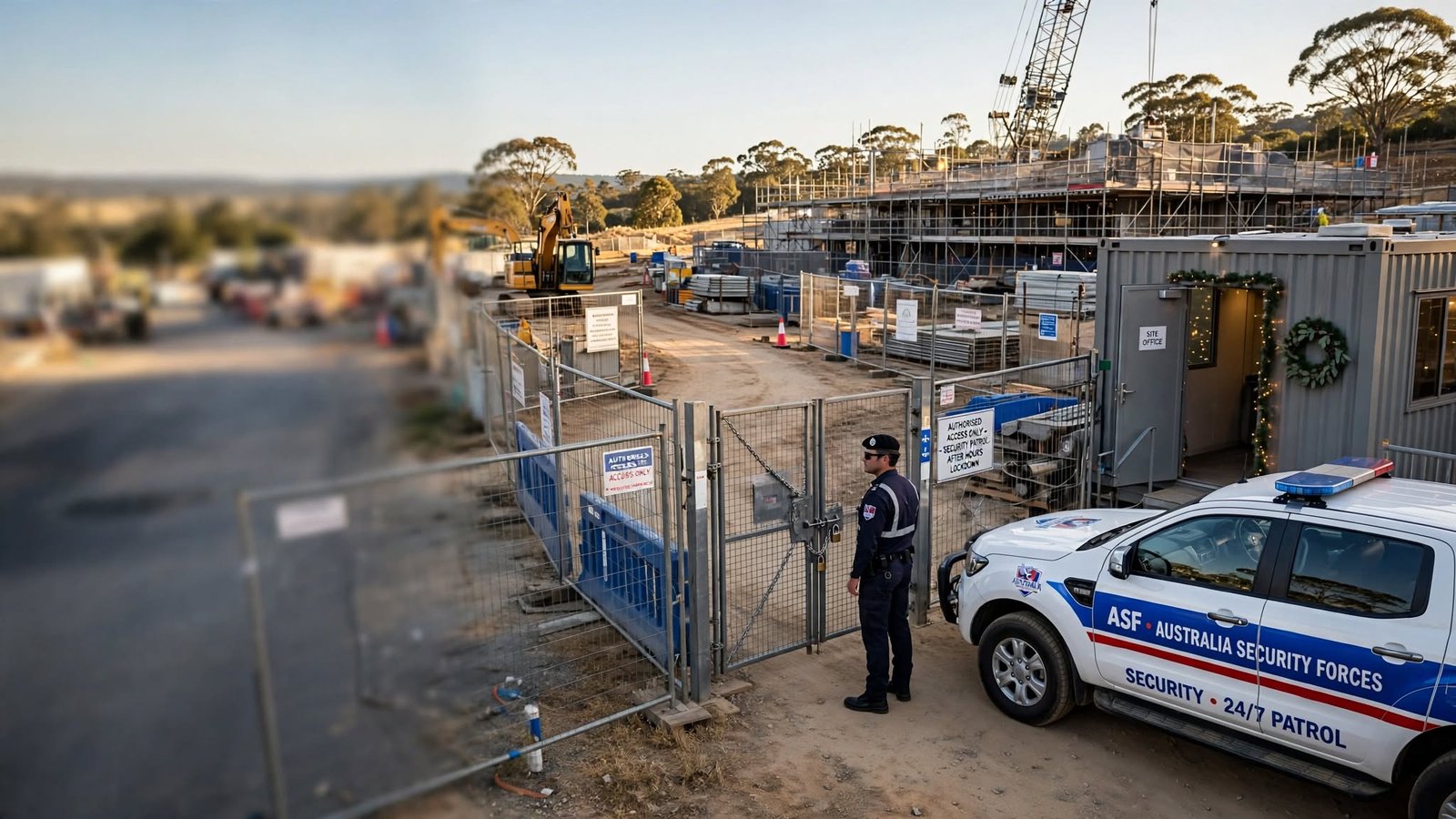
- Audit All Entry Points: Secure every gate with a heavy-duty chain and padlock. Account for all keys and remove spares from site offices, sheds, or plant cabins. Check secondary openings—including pedestrian gates and hoarding doors to ensure they cannot be lifted or forced open.
- Build a Photographic Asset Register: Write down a complete inventory of all tools, plant, and materials staying on site. Take clear photos of high-value items and log their serial numbers. This record speeds up insurance claims if a loss occurs.
- Fix or Isolate Faults Immediately: Repair broken lights, damaged fence panels, or loose void covers before locking up. If a repair cannot be finished in time, isolate the hazard and add it to your reopening inspection list.
Step 2: Secure Equipment, Machinery, Tools and Materials
- Lock Up Portable Tools: Remove hand tools and power tools from the site or lock them inside a reinforced, fixed shipping container. Never leave valuable gear inside temporary sheds or site offices. Engrave or mark tools and record them on your asset register.
- Immobilize Heavy Plant and Machinery: Park mobile plant in a central, well-lit area where possible. De-energies hydraulics and lower all booms, buckets, and rippers to the ground. Remove ignition keys from every machine and store them off site. Lock all cabin doors and fit security screens.
- Secure Tower Cranes: Block access at the crane base, scaffolds, and slab penetrations. Remove suspended loads and lifting chains. Raise and secure the hook well away from powerlines, and engage slew mode according to manufacturer guidelines for high winds.
- Protect Bulk Building Materials: Effective building materials theft prevention starts with reducing what you leave behind. Lock copper, steel fittings, and electrical stock inside secure containers. Keep pallets and stacked materials away from boundary fences so intruders cannot use them as climbing aids.
- Isolate Utilities and Dangerous Goods: Lock fuel tanks and store chemicals or solvents inside compliant hazardous goods lockers. Have a competent person isolate and lock off gas, water, and electricity at the source before leaving the site empty.
Step 3: Lock Down Gates, Fencing and Site Access
- Check Temporary Fencing Compliance: Strong temporary construction fencing security is a legal requirement under NSW WHS laws. Fencing must be continuous with no missing panels or ground gaps large enough for a child to crawl under. Join panels with proper clamps rather than tie wire or cable ties, and brace the fence against wind. Ensure mesh apertures are no wider than 75mm and remove any nearby objects that provide footholds.
- Control Gates and Keys: Fit every gate with a tight chain and padlock so no one can slip through the gap. Move all keys to a secure off-site location and update your key register to show who holds access during the break.
- Display Compliant Perimeter Signage: SafeWork NSW requires clear exterior signs displaying the principal contractor’s name, a contact person, and a 24/7 phone number. Mount warning signs noting active security patrols or CCTV monitoring.
- Set Shutdown Access Rules: Confirm who is authorized to enter the site over the holidays and give them written access instructions. Share current emergency contacts and escalation rules with your security provider.
Step 4: Isolate Scaffolding, Ladders and Physical Hazards
- Restrict Access to Scaffolding: Maintaining scaffolding security is a strict public safety duty. Block access to all structures under construction and ensure scaffold inspections are current. Remove loose materials, secure planks against wind uplift, and verify all ties match engineering designs.
- Cover Pits, Trenches and Voids: Barricade or cover all excavations, penetrations, and floor openings with load-bearing covers. Cap all pier holes. Visual barriers alone do not meet WHS legal standards.
- Cap Exposed Reinforcement: Fit protective caps over every exposed reinforcement bar to eliminate impalement hazards. Fix or cover protruding form ties and temporary fasteners during your final walkthrough.
- Remove Ladders and Check Temporary Works: Strict ladder security on construction sites is mandatory. Remove all extension, platform, and A-frame ladders from the site or lock them away completely. Verify that formwork, propping, and shoring are stable enough to handle summer storms without dropping debris outside the site boundary.
SafeWork NSW Compliance Notice: Principal contractors and PCBUs retain their WHS duties throughout the Christmas shutdown. SafeWork NSW inspectors actively patrol sites during December and January, issuing improvement notices or on-the-spot fines of $2,700 for businesses and $500 for individuals if a site is left unsecured.
Step 5: Arrange Overnight and Weekend Construction Site Mobile Patrols
Even a tightly locked site benefits from regular physical checks during a multi-week shutdown. Professional construction site mobile patrols provide documented proof of inspection, catch fence damage or break-ins early, and deter opportunistic thieves. Combining after-hours construction site security with weekend security patrols prevents minor issues from turning into major losses.
What a Construction Site Patrol Checks
Before closing, agree on a clear patrol scope with your security provider. A standard construction site holiday security Sydney patrol typically covers:
- Checking construction site perimeter security for cut panels, shifted fencing, or breaches.
- Verifying construction site gate security and padlock integrity.
- Looking for signs of forced entry, theft, or vandalism.
- Inspecting designated plant zones and locked storage containers.
- Reporting triggered alarms, blown security lights, or visible site hazards.
- Escalating incidents immediately using your site’s agreed emergency protocol.
Scheduled vs. Random Patrols
Scheduled patrols give site managers predictable, documented inspection times. Random patrols vary visit times each night so onlookers cannot spot gaps in coverage. Your choice depends on your site’s location, asset value, and shutdown length.
When to Choose Static Security Guards
Continuous on-site construction site security guards make sense when your project holds high-value plant, sits in a high-risk area, or closes for an extended period. For tailored construction site patrols Sydney or static guarding, speak with Australia Security Forces to match your coverage to your site layout.
Step 6: Review Alarms, CCTV, Lighting and Emergency Procedures
- Test Alarms and Cameras: Test all intrusion sensors and confirm your alarm system is armed for unoccupied mode. Check CCTV camera angles and verify that recording drives have enough storage to last the entire holiday period.
- Verify Security Lighting and Power: Replace dead exterior floodlights before closing. If you isolate main site power, confirm your alarms, cameras, and security lights run on an independent circuit or battery backup.
- Update Emergency Escalation Lists: Confirm who receives alarm alerts and who will attend the site if an incident occurs. Give your security provider updated phone numbers and gate access codes.
- Enforce Written Incident Reporting: Ensure every shutdown check or breach is logged with exact times, locations, photos, and actions taken. Detailed security incident reporting supports insurance claims and WHS audits.
Construction Site Christmas Shutdown Security Checklist
Use this checklist before closing your site for the holidays. It works alongside the official SafeWork NSW checklist and your site WHS plan.
Before Leaving the Site
- Walk the full perimeter to ensure fencing has no gaps, holes, or loose panels.
- Confirm all temporary fencing is clamped, braced against wind, and free of nearby footholds.
- Lock all gates with chains and padlocks, collect all keys, and update your key register.
- Mount clear perimeter signs showing the principal contractor, contact name, and 24/7 phone number.
- Remove portable hand and power tools or lock them inside fixed containers.
- Remove ignition keys from all machinery and store them off site.
- De-energize hydraulics and lower booms, buckets, and rippers to the ground.
- Lock plant cabin doors and install security screens.
- Block tower crane access, remove suspended loads, and set slew mode for high winds.
- Lock copper, steel, and electrical materials inside secure containers.
- Store fuel, chemicals, and dangerous goods inside compliant locked lockers.
- Have a competent person isolate gas, water, and electricity at the source.
- Empty water drums as required.
- Remove all extension, platform, and A-frame ladders from the site.
- Secure scaffold planks against wind and clear loose items from decks.
- Verify scaffold inspection records are current.
- Cap all exposed reinforcement bars.
- Cover voids, pits, trenches, and pier holes with load-bearing covers.
- Ensure no loose objects can fall outside the site boundary.
- Clear rubbish and loose materials from the site.
- Photograph remaining plant and materials and log serial numbers on your asset register.
- Check that traffic barriers comply with your shutdown traffic plan.
- Keep public footpaths outside the site clear and safe.
Security Systems and Monitoring
- Test alarm sensors and confirm active monitoring for the break.
- Check CCTV camera angles and confirm recording capacity covers the full shutdown.
- Test all external security lights and replace blown bulbs.
- Update emergency contact and keyholder lists.
- Confirm alarm escalation rules with your monitoring provider.
- Fix any system faults before locking up.
Holiday Security Arrangements
- Decide between mobile patrols or static guards based on site risk and asset value.
- Confirm patrol dates, site instructions, and access codes with your security provider.
- Finalize incident reporting and escalation steps.
- Document rules for authorized contractor visits during the break.
- Share closure dates and emergency contacts with your security team.
Before Restarting Work
- Inspect the perimeter and gates before letting workers back on site.
- Check for signs of forced entry, vandalism, or fence damage.
- Audit tools, plant, and materials against your pre-shutdown asset register.
- Test alarms, CCTV cameras, and security lights.
- Inspect all scaffolding, covers, and safety controls before work resumes.
- Review any incident reports logged during the break.
- Record your reopening inspection findings in writing.
How to Choose Construction Site Security Services in Sydney
- Valid NSW Security Licenses: Confirm the provider holds a current NSW Master Security License and deploys individually licensed officers.
- Proven Construction Experience: Choose a team familiar with active job sites, WHS rules, and builder reporting standards.
- Site-Specific Risk Assessments: Work with a provider that inspects your site layout before recommending patrol frequencies or guard numbers.
- Clear Written Duty Statements: Ensure patrol routes, check intervals, and guard duties are documented in writing.
- Fast Incident Escalation: Verify how breaches are reported, who gets called, and how fast management responds.
- Flexible Scheduling: Construction timelines shift; confirm your provider can adjust coverage easily if your reopening date changes.
Frequently Asked Questions
How do I secure a construction site over the Christmas shutdown?
Complete a full perimeter inspection, immobilize heavy plant, lock tools in fixed containers, remove ladders, cap exposed rebar, cover all voids, test alarms and CCTV, update emergency contacts, and book construction site mobile patrols or static guards. Always follow the official SafeWork NSW checklist and your site WHS plan.
What equipment should be secured before a construction site closes?
Lock hand and power tools inside fixed containers. Remove ignition keys from heavy machinery and lock all cabins. Store copper, steel, and high-value materials in locked containers, secure chemicals in compliant lockers, lock fuel tanks, and restrict access to tower cranes.
How can builders reduce construction equipment theft?
Effective construction equipment theft prevention combines removing ignition keys, locking cabins, keeping a photographic asset register with serial numbers, maintaining gap-free perimeter fencing, running CCTV, and scheduling regular security patrols. Keep valuable stock out of sight from the street.
Why must scaffolding and ladders be secured during a holiday shutdown?
SafeWork NSW requires builders to remove all extension, platform, and A-frame ladders and maintain strict scaffolding security during unattended periods. Unsecured ladders and scaffolds allow trespassers to reach high-risk elevated areas, creating severe fall hazards and legal liability.
Are mobile patrols suitable for construction sites during Christmas?
Yes. Construction site mobile patrols provide documented, regular checks of your fencing, gates, and storage containers throughout the break without the cost of full-time guarding. High-value or high-risk sites may still benefit from continuous static guards.
How often should a construction site be checked during a shutdown?
SafeWork NSW advises regular inspections throughout the shutdown. The ideal frequency depends on your site’s location, asset value, and risk profile, and should be agreed upon with your security provider before closing.
What should a construction site security incident report include?
A thorough security incident reporting log records the date, time, exact location, nature of the issue, actions taken, who was notified, and recommended follow-up steps. These records support insurance claims and WHS reviews.
What does SafeWork NSW recommend before a construction site closes for Christmas?
SafeWork NSW expects principal contractors to secure boundary fencing, lock gates, display 24/7 contact signage, isolate utilities, remove ladders, cover voids, cap rebar, immobilize plant, lock away chemicals, clear debris, and schedule regular site checks. Inspectors patrol sites over December and January and issue fines for unsecured hazards.
Protect Your Construction Site Before the Christmas Shutdown
The Christmas and New Year break is one of the longest unattended periods a Sydney construction site faces each year. A methodical pre-shutdown process—covering perimeter fencing, machinery security, hazard isolation, alarm checks, and clear emergency contacts protects your assets and keeps you compliant with NSW WHS laws.
Construction site summer shutdown security, construction site holiday security Sydney, construction site Christmas shutdown security, construction site security over Christmas, construction site security during holidays, construction site patrols Sydney, after-hours construction site security Sydney, construction equipment theft prevention, building site security guards Sydney, construction site access control Sydney, summer construction site security checklist, construction site holiday security Sydney, construction equipment theft prevention, construction site patrols Sydney, construction site shutdown checklist, after-hours construction site security, construction site mobile patrols, mobile security patrols Sydney, construction site security guards, temporary construction fencing security, scaffolding security, ladder security on construction sites
Australia Security Forces provides licensed static guards and mobile patrols for construction site holiday security Sydney, after-hours construction site security, and construction site patrols Sydney across New South Wales.
- NSW SLED Master License: 000 107 741
- ABN: 84 638 907 105
- Public Liability Insurance: $20 Million Comprehensive Cover
To schedule a pre-shutdown assessment or request a quote, contact Australia Security Forces at 1300 450 415 or visit their website.