
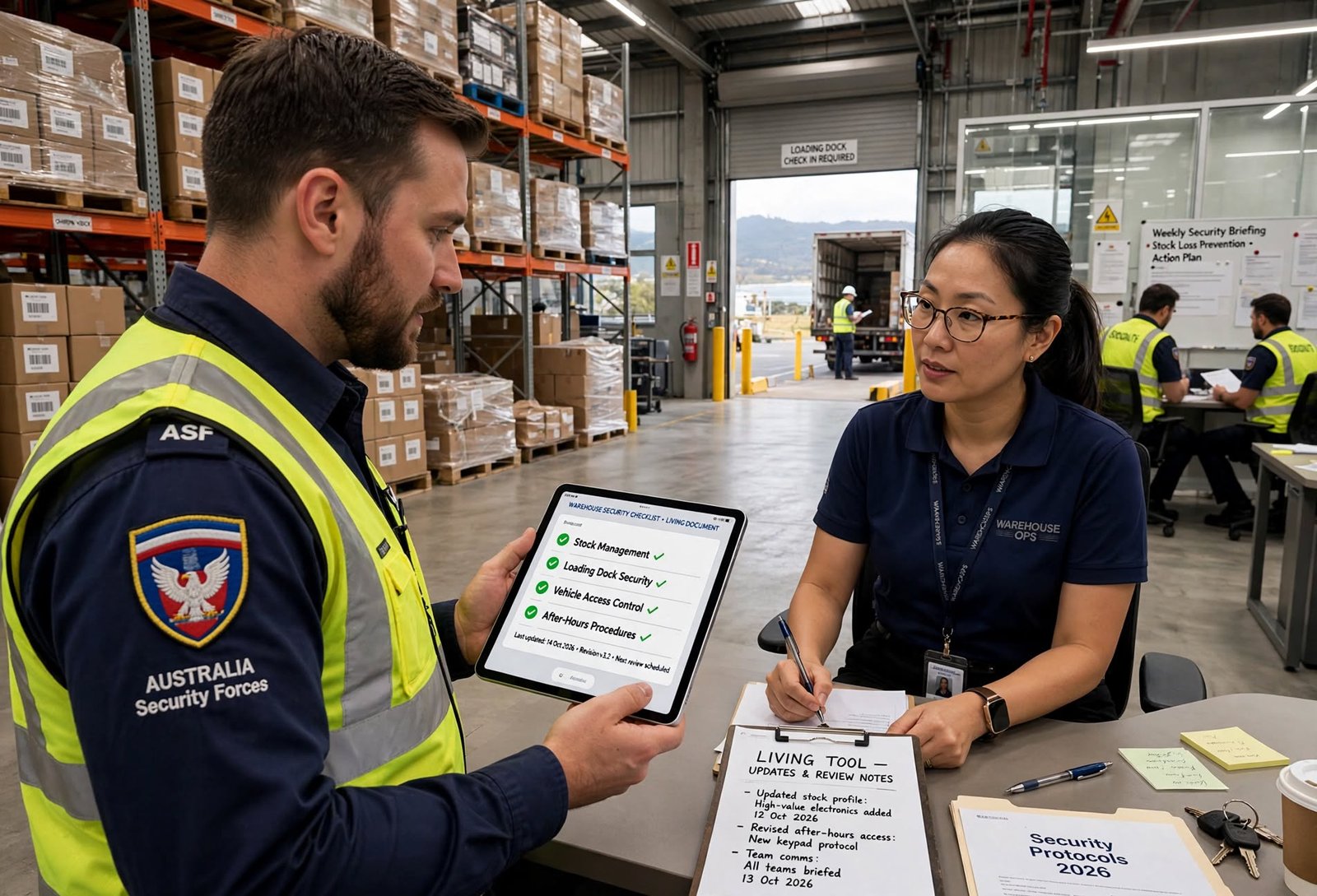
warehouse security checklist for NSW facilities

Warehouse Security Sydney

Warehouse Security Checklist To Protecting The Stock, Loading Docks and Vehicle Access

Warehouses and distribution centers hold significant value in stock, specialized equipment, logistics vehicle fleets, and the hard-earned trust of commercial customers who depend on reliable order fulfilment. Yet the combination of high-volume goods movement, multiple loading dock entry lines, rapid shift handovers, and constant carrier arrivals creates complex operational conditions where security gaps can go completely undetected for weeks.
Implementing a structured warehouse security checklist gives operations managers a clear way to assess active warehouse security measures, isolate structural vulnerabilities, and audit current field performance. Rather than forcing your team to react to breaches after the fact, a systematic checklist approach helps teams maintain consistent warehouse security procedures across shifting rosters, multi-building footprints, and changing contractor workforces.
This comprehensive technical guide covers every critical vector of modern industrial site security from inventory stock loss controls to loading dock access control, vehicle access control systems, physical perimeter checks, and specialized after-hours procedures.

Warehouse Security Guards Sydney

Common Warehouse Security Risks Businesses Should Identify
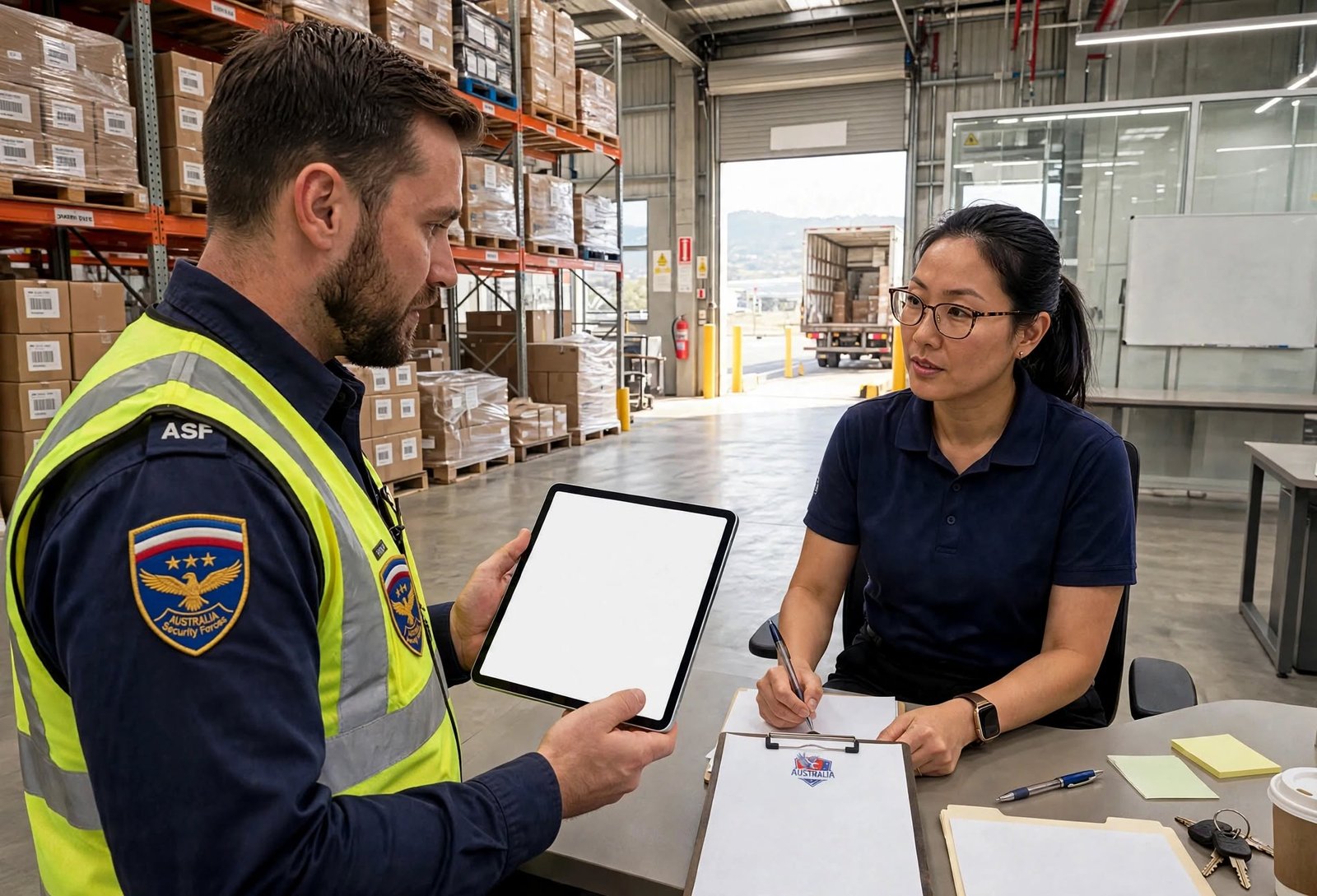
Warehouse exterior with loading docks
Before executing site-wide warehouse security CCTV measures, operations managers must evaluate the specific physical exposures facing their facility. Not every logistical hub faces identical vulnerabilities; your structural defenses should scale in direct proportion to stock values, vehicle lane volume, total access gates, and whether your operations run on intensive 24/7 rosters.
Conducting a formalized, localized warehouse risk assessment that maps threats directly to your facility layout is your most reliable starting point. Common risk factors to monitor include:
  • Opportunistic & Targeted Intrusion: Theft of high-value tools, machinery, and raw pallet stock, making proactive warehouse theft prevention a core priority for modern facility directors.

  • Compromised Entry Points: Unauthorized access tracking resulting from unlocked side portals, weak roller shutters, or unmonitored emergency exit clearings.

  • Supply Chain Discrepancy Gaps: Fraudulent or completely unverified dispatches where commercial stock leaves the perimeter without valid purchase overrides, destroying your goods-in and goods-out security framework.

  • Unmonitored Transit Windows: Loading bays, cargo docks, and container yards left unobserved during chaotic shift handovers or extended midnight windows.

  • Defective Perimeter Integrity: Broken boundary fencing, isolated blind spots, or blown exterior floodlights that create dark concealment lanes for trespassers, highlighting the need for robust warehouse perimeter security.

  • Internal Asset Misuse: Subcontractors or internal staff accessing restricted cleanrooms, electronics bays, or high-value inventory cages beyond their specific induction level.

  • Incomplete Access Logging: Legacy visitor logbooks that fail to accurately capture external carrier details, making retroactive audits difficult if a breach occurs.

  • Delayed Hazard Escalation: Slow or undocumented security incident reporting workflows that allow minor asset losses to grow into systematic internal fraud networks.

Warehouse Security Company Sydney

Warehouse Stock and Inventory Security Checklist

Sustaining effective, long-term stock loss prevention relies on physical access controls and inventory accounting systems operating in perfect alignment. Physical cages restrict physical movement; computerized record structures ensure internal discrepancies are flagged instantly. Executing a tight inventory theft prevention strategy requires ongoing communication between inventory controllers, logistics staff, and finance personnel to ensure physical stock states mirror digital databases.
Review the following operational checklist parameters to secure your high-value inventory:
  • Deployed high-value or high-risk inventory rows inside dedicated, structural stock cages mapped to strict employee access permissions.
  • Restricted cage access to authorized personnel, with sign-in keys and authorization logs audited by site supervisors every 30 days.
  • Mandated that all outgoing pallet dispatches mirror authorized customer purchase orders, securing your warehouse dispatch security workflow.
  • Initiated immediate management audits for all stock discrepancies, overages, or inventory variances to reinforce inventory theft prevention.
  • Isolated and logged damaged stock, customer returns, and inter-depot transfers under a completely independent verification system.
  • Revoked digital access keys and recovered physical entry credentials immediately when an employee or subcontractor role terminates.
  • Stored portable scan devices, forklift keys, vehicle transponders, and valuable tools inside electronic locker arrays when not in active use.
  • Scheduled comprehensive blind stock counts at regular intervals, ensuring all physical audits are signed off and saved securely.
  • Communicated core goods-in and goods-out security rules to all dock personnel, floor supervisors, and order pickers.

Warehouse access control Sydney

Loading Dock Security Checklist
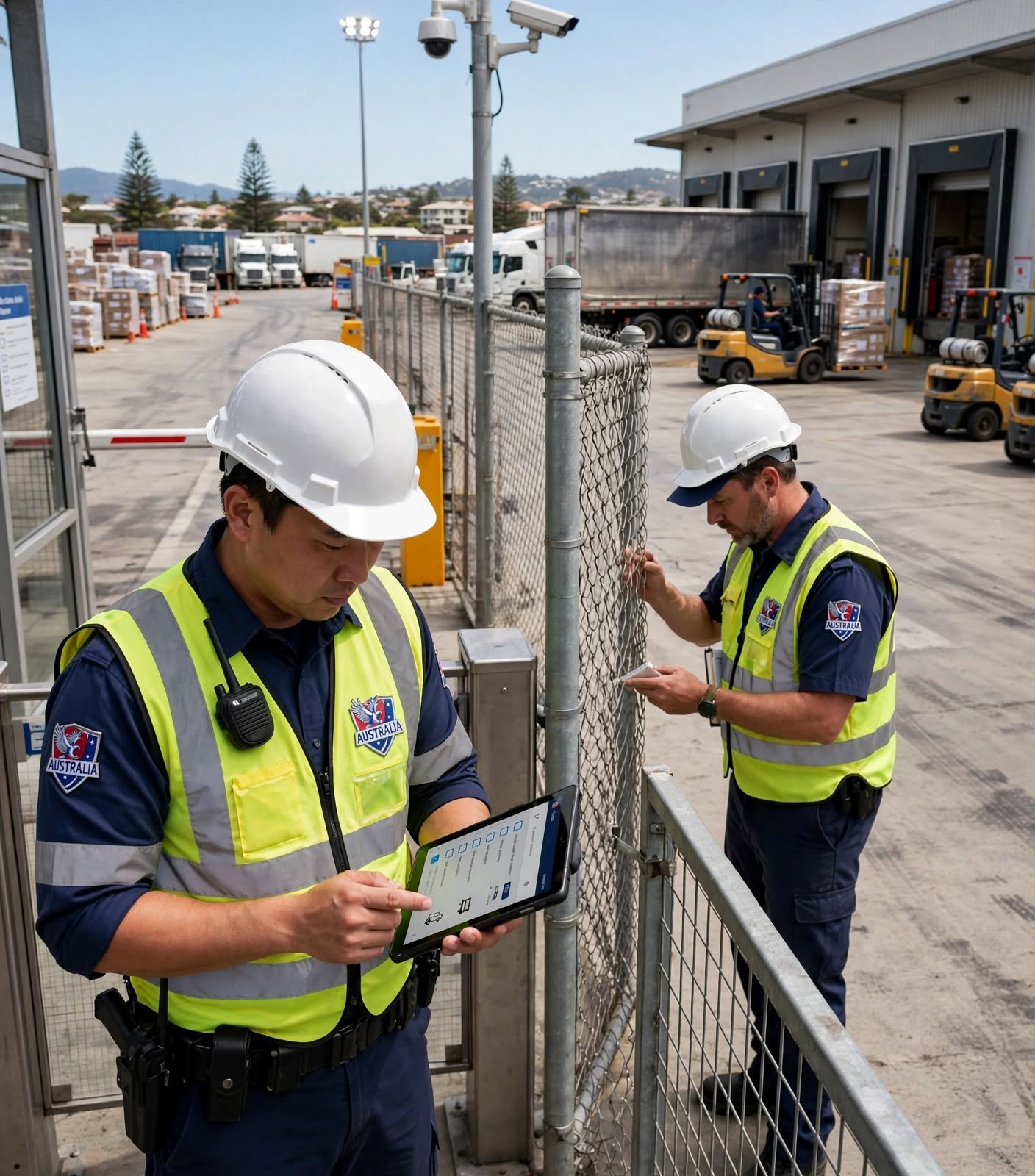
warehouse security checklist
The active loading bay represents one of the highest financial liability zones inside any modern logistics property. The fast-paced movement of heavy transport vehicles, high-volume container handling, and the continuous presence of third-party carriers create multiple opportunities for cargo theft prevention protocols to break down. Establishing robust loading bay security requires a calculated mix of administrative checking steps, loading dock access control hardware, and visible physical deterrence.
Verify these high-risk loading dock security variables across every shift:
  • Ensured all freight loading, cross-docking, and trailer staging areas are illuminated by high-output commercial floodlights during night operations.
  • Executed strict delivery verification procedures, ensuring carrier names, driver licenses, truck registrations, and manifest data are fully logged before gate clearance.
  • Mandated dedicated staging zones for third-party drivers, restricting external transport operators from freely wandering through active stock lanes.
  • Checked high-value cargo seals, logged container serial numbers, and escalated discrepancies immediately to support cargo theft prevention.
  • Enforced strict loading dock access control, completely barring un-inducted personnel from active loading aprons during dispatch runs.
  • Integrated warehouse pickers, shipping clerks, and assigned guard forces into a singular coordination loop to protect warehouse dispatch security.
  • Positioned high-definition CCTV monitoring units to capture complete vehicle registration angles at inbound and outbound dock portals.
  • Maintained digital transit manifests tracking arrival times, transport carriers, and freight conditions to protect your stock loss prevention metrics.
  • Discovered and documented cargo variances before accepting deliveries from third-party transport links.

Logistics Security Sydney

Vehicle Access Control for Trucks, Staff and Contractors

Orchestrating the continuous movements of prime movers, box trailers, employee commuter cars, and contractor vans is a major logistical challenge. Deployed vehicle access control frameworks must balance the need to facilitate efficient transport turnaround times against the risk of unauthorized vehicle access.
  • Maintained automated vehicle entry and exit logs to record all heavy vehicle transits and terminal turnarounds.
  • Enforced strict driver identification procedures for all inbound commercial transport drivers to maximize truck and delivery vehicle security.
  • Implemented detailed vehicle transit records for high-value freight zones and out-of-hours logistics movements.
  • Established clear authorization paths for unscheduled night arrivals, identifying exactly which manager holds authority to open gates after hours.
  • Separated pedestrian footpaths from heavy vehicle transit lanes where architecturally practical to minimize risk on active loading aprons.
  • Configured warehouse gate security lines to route all delivery traffic through a singular, easily auditable main entrance point.
  • Guided unbooked or unexpected arrivals into a isolated secure holding bay via standard warehouse security procedures until manifest data is verified.
  • Recorded and reported any attempted unauthorised vehicle access directly to central operations management as a high-priority incident.
  • Extended strict visitor and contractor access control rules down to all contractor work vehicles entering the perimeter.

Perimeter, Doors, Lighting and CCTV Checklist

The external architectural boundary of an industrial asset serves as your front-line layer of protection. Vulnerabilities inside your warehouse perimeter security line allow intruders to exploit structural gaps long before automated internal building alarms can trigger.
  • Inspected structural security fence lines to ensure no gaps, wire cutting, or erosion paths exist that could facilitate unauthorised vehicle access or foot trespass.
  • Locked all secondary vehicle entry lines, pedestrian gates, and material yards when not in active use to preserve warehouse gate security.
  • Verified that roller shutters, heavy side portals, fire exits, and roof access hatches are completely locked down at the conclusion of every operational shift.
  • Programmed commercial security lighting to cover structural boundaries, staff parking arrays, and terminal loading docks throughout the night.
  • Optimized your CCTV monitoring camera matrix to achieve overlapping visibility lines across blind spots and primary shipping channels.
  • Scheduled regular system tests for automated security lines, ensuring any alarm response faults are reported and repaired instantly.
  • Logged all physical keys, master overrides, and digital swipe badges inside encrypted tracking systems to prevent credential loss.
  • Logged physical structural defects, like broken boundary fences or blown floodlights, inside your warehouse security procedures log for fast repairs.
  • Executed dedicated perimeter inspections on foot or via mobile patrol vehicles during every major shift changeover window.

Employee, Visitor and Contractor Access Procedures

Industrial physical access protection cannot rely on structural boundaries alone. It demands strict, operational tracking rules defining who has authorized permission to enter specific areas under clear parameters. Maintaining unified visitor and contractor access control pairs naturally with accurate employee access permissions to form a secure workspace environment.
  • Isolated hazardous zones, high-value inventory grids, and central server rooms, restricting entry purely to staff holding valid digital clearances.
  • Guided visiting vendors, machinery technicians, and cargo auditors through a centralized main portal to enforce strict visitor and contractor access control.
  • Collected legacy electronic badges and recovered physical master keys immediately when an employee shifts departments or leaves the firm.
  • Evaluated subcontractor entry windows periodically, ensuring long-term access cards are automatically deactivated every 90 days.
  • Trained ground personnel to identify and safely escalate anomalous activity or un-inducted individuals inside restricted stock zones.
  • Integrated your physical entry guidelines into standard onboarding material for all newly hired warehouse workers and supervisors.
  • Saved clean access histories to protect your internal security incident reporting documentation if a discrepancy requires a retroactive audit.

After-Hours Warehouse Security and Mobile Patrols
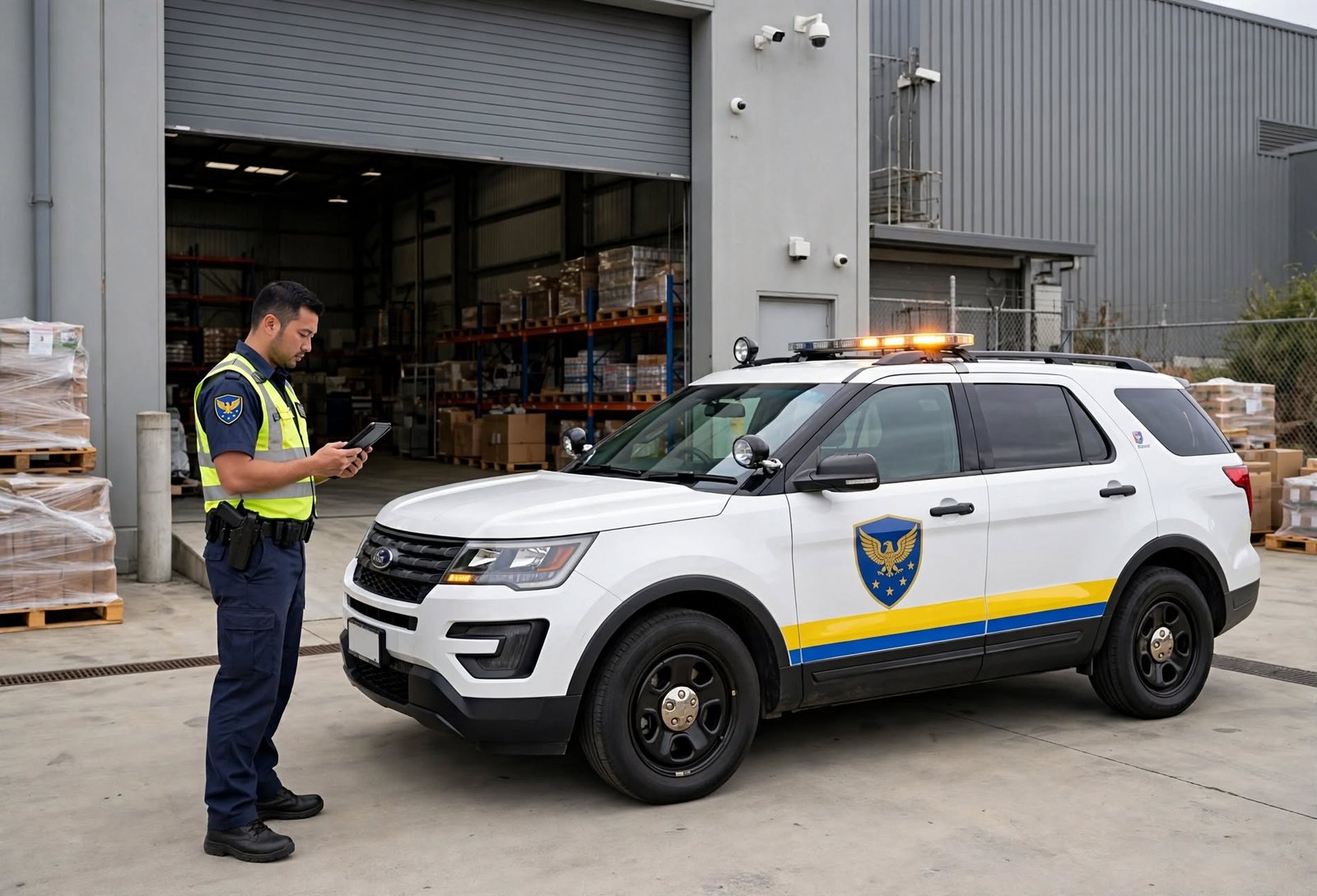
vehicle yard and perimeter fencing
The overall risk profile of an industrial storage property shifts drastically the moment the active workforce concludes operations for the day. Unattended inventory, dark loading docks, and silent perimeters invite targeted intrusions. Executing specialized after-hours warehouse security schedules protects your assets when the deterrent value of a busy workforce is gone.
  • Implemented formalized facility close-out protocols identifying exactly who handles internal building lock-ups, door checks, and alarm activation.
  • Documented end-of-shift structural verifications across all roller shutters, main vehicle gates, and secure inventory lockers.
  • Built clear alarm escalation protocols, outlining who receives out-of-hours sensor data and detailing exact field alarm response steps.
  • Maintained secure hand-over logs to capture operational risks, weird vehicle sightings, or broken security hardware between changing shifts.
  • Customized your out-of-hours coverage model based on real-world asset value, facility layout, and previous area security threats.
Many facility operations choose to combine their internal workflows with professional human assets. Stationing static security guards provides a permanent, assertive physical presence at a singular point—making this model highly effective for main gatehouses and inventory portals.
Conversely, deploying randomized warehouse mobile patrols utilizes specialized response vehicles to secure wide geographic boundaries and check multiple high-risk structures across a facility. The right operational choice relies directly on your overall square meterage, stock liabilities, area incident data, and preferred protection intensity. Conducting a formal warehouse risk assessment serves as your most reliable guide to identifying the correct balance.

Warehouse Security Incident Reporting and Response

If your personnel locate an active security vulnerability such as an unmapped inventory variance, cut perimeter fencing, a suspicious vehicle lingering near loading doors, or an active trespasser the actions executed in the first five minutes dictate your overall loss reduction. Establishing clear security incident reporting protocols and fast emergency response procedures ensures your crew reacts with total clarity.
Your team should operate under these core field protection guidelines:
  • Operate in strict accordance with the facility’s saved incident log and emergency response procedures before acting unilaterally.
  • Prioritize human safety above all physical assets; never attempt to physically confront suspicious trespassers or detain external vehicles.
  • Escalate the threat data immediately to your assigned site manager or designated security contact, following their field directions cleanly.
  • Log precise observations—including exact times, vehicle color/make, physical descriptions, and gate numbers to protect your security incident reporting records.
  • Preserve real-time data logs, shipping manifests, or high-definition camera records while system data is fresh.
  • Contact emergency services 1300 450 415 instantly if you encounter an active crime, a physical threat to your crew, or an urgent event requiring first responders.

Hire warehouse security guards Sydney

When Should a Warehouse Consider Professional Security Services?

Not every logistics asset commands identical security resourcing. However, specific operational triggers indicate that your facility requires professional warehouse security services to protect your business continuity:
  • Properties storing high-value, highly liquid inventory lines where inventory theft prevention represents a critical bottom-line concern.
  • Facilities engineered with wide layouts, multiple loading doors, dark boundary fences, or limited natural visibility lines.
  • Supply chains running continuous night operations or multi-shift rotations where after-hours warehouse security cannot be safely managed by floor staff.
  • Properties facing repeating security challenges, such as perimeter fence cutting, asset losses, or access control violations.
  • Firms where internal logistics crews cannot spare the manpower to actively monitor primary entry gates and secure perimeters 24/7.
Professional warehouse security services deliver a powerful, active on-site deterrent. Deployed security guards provide reliable front-gate access control and interior checks, while randomized mobile security patrols handle external fence protection, loading dock verifications, and rapid alarm response outside standard business hours. Utilizing a structured warehouse risk assessment takes the guesswork out of asset protection, helping you construct a strategy based on visible risk data.
Australia Security Forces delivers comprehensive, SLED-licensed warehouse security services Sydney wide and across regional New South Wales. We deploy premium static security guards and randomized warehouse mobile patrols specialized in protecting complex industrial properties, logistics centers, and wide-footprint distribution yards. Our senior management directive coordinates directly with your team to build a proportionate, WHS-compliant framework that completely secures your footprint without disrupting your supply chain output.
    • NSW SLED Master License: 000 107 741
    • ABN Registration: 84 638 907 105
    • Corporate Liability Indemnity: $20 Million Comprehensive Public Liability Policy

📞 Call Now for an Express Commercial Quote: 1300 450 415
✉️ Email Our Technical Estimating Team: Support@australiasecurityforces.com.au

Leave A Comment

Receive the latest news in your email
Table of content
Related articles